Ecommerce advertising is how online brands use paid placements—search, display, social, shopping feeds, video, and more—to reach buyers at every stage of the journey. Getting your e-commerce advertising mix right is what turns impressions into revenue.
Nearly 80 percent of American shoppers say they notice e commerce ads before making a purchase decision. With so much competition, finding the right way to connect with potential customers has never been more important. Whether you want to catch the eye of someone actively searching, build brand awareness, or re-engage past visitors, understanding the latest advertising for ecommerce helps you turn online interest into real sales. When you’re ready to go deep on one channel, start with our Facebook ads for Shopify guide or the landing-page angle prompts we use for Meta ads.
What is ecommerce advertising?
Ecommerce advertising means using paid media to promote products and drive sales for an online store. That includes auction-based search and shopping campaigns, visual display and social placements, retargeting to past visitors, and partnerships like influencer or creator-led sponsorships—often managed alongside email and on-site conversion work.
Strong ecommerce advertising matches each format to intent: capture demand where people search, build awareness where they browse, and bring back high-intent visitors who did not convert the first time. The seven types below are the core building blocks most scaling brands use.
Table of Contents
- What is ecommerce advertising?
- Search Ads: Target Shoppers Actively Looking to Buy
- Display Ads: Drive Awareness with Eye-Catching Visuals
- Social Media Ads: Engage Users on Popular Platforms
- Retargeting Ads: Re-Engage Visitors Who Didn't Convert
- Video Ads: Showcase Products with Powerful Storytelling
- Shopping Ads: Highlight Products Directly in Search Results
- Influencer Ads: Leverage Trusted Voices for Brand Growth
- Audio Ads: Reach Shoppers in the Moments Between Screens
Quick Summary
| Takeaway | Explanation |
|---|---|
| 1. Use Search Ads for Immediate Buyer Engagement | Target shoppers actively searching for products to connect at critical purchase moments. |
| 2. Leverage Display Ads for Brand Awareness | Use eye-catching visuals to engage potential customers even when they aren't actively shopping. |
| 3. Optimize Social Media Ads with Targeted Strategies | Tailor ads to specific demographics and interests to enhance user engagement on social platforms. |
| 4. Retarget Non-Converting Visitors Effectively | Remind users of products previously viewed to encourage return and conversion. |
| 5. Create Compelling Video Ads for Emotional Connections | Utilize storytelling in video ads to resonate with audiences and increase brand loyalty. |
1. Search Ads: Target Shoppers Actively Looking to Buy
Search ads are your precision instrument for reaching customers who are literally searching to make a purchase right now. By strategically placing advertisements that match specific user search queries, you can instantly connect with shoppers at the most critical moment: when they are ready to buy.
The power of search advertising lies in its ability to match ads directly with user intent. Unlike other advertising methods that broadcast to broad audiences, search ads allow you to zero in on potential customers who have already signaled their interest through their search behavior. Imagine being able to show your product exactly when someone is typing in keywords related to what you sell.
How Search Ads Work
Search ads operate on a simple yet powerful principle: your advertisement appears alongside organic search results when someone searches for keywords related to your product or service. Google Ads and Bing Ads platforms enable you to bid on specific search terms that your ideal customers are likely to use.
Key Targeting Strategies
To maximize your search ad effectiveness, consider these targeting approaches:
- Exact Match Keywords: Target precise search phrases matching your product
- Broad Match Modification: Capture variations of your target keywords
- Negative Keywords: Exclude irrelevant search terms that could waste your budget
- Geographic Targeting: Focus on regions where your potential customers are located
Real World Implementation
If you sell running shoes, you might target keywords like "best running shoes for marathon training" or "lightweight running shoes for women". By using clickstream data to identify high value customer segments, you can refine your ad targeting and reduce unnecessary advertising spend.
Search ads represent more than just visibility they are a direct pathway to connecting with motivated buyers who are actively seeking solutions you provide. The key is precision targeting and understanding user intent.
2. Display Ads: Drive Awareness with Eye-Catching Visuals
Display ads are your visual storytellers in the digital marketing world, transforming passive browsing into active engagement. These graphic advertisements strategically appear across websites, social media platforms, and mobile apps to capture attention and spark curiosity about your brand.
Unlike search ads that target specific queries, display ads work by learning user profiles based on online browsing behavior and predicting potential ad responses. This means your visual content reaches people who might be interested in your products even when they are not actively searching.
Visual Storytelling Elements
Successful display ads combine several critical design components:
- Compelling Graphics: High quality images that grab immediate attention
- Clear Brand Identity: Consistent color schemes and logos
- Concise Messaging: Short powerful text that communicates value quickly
- Strong Call to Action: Inviting buttons or text prompting user interaction
Strategic Ad Placement
The magic of display advertising happens through intelligent sponsored content integration that feels natural within user browsing experiences. Modern platforms use sophisticated algorithms to determine the most relevant websites and audience segments for your specific products.
Targeting Techniques
To maximize your display ad effectiveness, consider these targeting approaches:
- Demographic targeting
- Interest based targeting
- Behavioral targeting
- Remarketing to previous website visitors
Display ads are not just about selling. They are about creating visual narratives that connect emotionally with potential customers, transforming casual browsers into engaged prospects. Your goal is to design ads that feel less like interruptions and more like discoveries.
3. Social Media Ads: Engage Users on Popular Platforms
Social media ads are your direct line to millions of potential customers scrolling through their favorite platforms. These targeted advertisements transform passive social media consumption into strategic marketing opportunities that can instantly connect your brand with interested audiences.
How Social Media Advertising Works
Social media platforms offer unprecedented targeting capabilities that go far beyond traditional advertising. Strategy recommendation systems analyze advertisers' objectives to help you place ads precisely where your ideal customers are most likely to engage.
Strategic Targeting Options
Modern social media ads allow you to segment audiences based on multiple sophisticated criteria:
- Demographic information
- Geographic location
- Interests and behaviors
- Previous interactions with your brand
- Custom audience creation
Psychological Engagement Techniques
Effective social media advertising taps into deeper psychological mechanisms. Research demonstrates how strategic content can dramatically impact consumer psychology, leveraging emotional triggers and social proof to drive purchasing decisions.
Platform Specific Strategies
Each social platform requires a nuanced approach:
- Facebook: Detailed demographic targeting
- Instagram: Visually driven product showcases
- TikTok: Short engaging video content
- LinkedIn: Professional and industry specific targeting
Practical Implementation Tips
To maximize social media ad performance:
- Create platform specific content
- Use high quality visuals
- Write concise compelling ad copy
- Test multiple ad variations
- Monitor and adjust based on performance metrics
Social media ads are not just about visibility. They are about creating meaningful connections that transform casual browsers into potential customers. Your success depends on understanding platform dynamics and crafting messages that resonate authentically with your target audience.
4. Retargeting Ads: Re-Engage Visitors Who Didn't Convert
Retargeting ads are your second chance to win over potential customers who visited your website but left without making a purchase. These strategic advertisements follow users across different websites and platforms, reminding them of products they previously viewed and nudging them back toward conversion.
How Retargeting Works
When someone visits your website, a small piece of code called a pixel gets placed in their browser. This invisible tracker allows you to show customized ads to these specific visitors as they continue browsing other websites and social media platforms. Think of it like a gentle reminder of products they were once interested in.
Key Retargeting Strategies
To maximize your retargeting effectiveness, consider these approaches:
- Website Visitor Targeting: Ads shown to people who recently visited your site
- Abandoned Cart Campaigns: Targeting users who added items to cart but did not complete purchase
- Product Page Viewers: Showing ads for specific products users previously viewed
- Time Based Segmentation: Adjusting ad frequency based on how recently someone visited
Implementation Best Practices
Successful retargeting requires a delicate balance:
- Create visually appealing ad designs
- Offer compelling reasons to return
- Use clear and attractive call to action messages
- Set frequency caps to avoid overwhelming users
- Rotate ad creative to prevent ad fatigue
Psychological Triggers
Retargeting works by leveraging several psychological principles:
- Familiarity breeds comfort
- Repeated exposure increases brand recognition
- Reminder of unfinished actions can prompt completion
- Social proof and urgency can accelerate decision making
Retargeting is not about being pushy. It is about providing helpful reminders and creating multiple touchpoints that guide potential customers back to your products. When done right, these ads feel like a personalized shopping assistant rather than an intrusive marketing tactic.
5. Video Ads: Showcase Products with Powerful Storytelling
Video ads transform product marketing from simple promotion to immersive storytelling that captures audience imagination. These dynamic advertisements leverage visual and auditory elements to create emotional connections that traditional advertising methods cannot match.
The Power of Visual Storytelling
Research demonstrates that engaging video content can dramatically influence consumer behavior, helping brands attract viewers and shape purchasing decisions. Unlike static images, videos allow you to demonstrate product features, showcase real world applications, and communicate brand personality in seconds.
Strategic Video Ad Approaches
Effective video advertisements typically follow these core strategies:
- Demonstration Videos: Show product functionality
- Testimonial Narratives: Feature authentic customer experiences
- Problem Solution Format: Highlight how your product solves specific challenges
- Behind the Scenes Content: Build brand transparency and connection
Technical Targeting Techniques
Personalized advertising strategies can help target high value customers through dynamic video content. Modern platforms allow you to customize video ads based on:
- Viewer demographics
- Previous interaction history
- Browsing behaviors
- Specific interest categories
Production Quality Tips
To create compelling video ads:
- Maintain high resolution visuals
- Keep videos concise (15 to 60 seconds)
- Use clear audio and engaging background music
- Include captions for silent viewing
- Integrate strong call to action elements
Video ads are not just about selling a product. They are about creating an experience that resonates with your audience, transforming viewers from passive observers into potential customers who feel genuinely connected to your brand.
6. Shopping Ads: Highlight Products Directly in Search Results
Shopping ads transform online search results into visual product catalogs, giving potential customers instant access to your merchandise right when they are most likely to make a purchase. These dynamic advertisements showcase product images, prices, and key details directly within search engine pages.
How Shopping Ads Operate
Pay per click advertising models enable precise targeting of potential customers by displaying your products exactly when users search for related items. Unlike traditional text based ads, shopping ads provide a rich visual experience that captures attention immediately.
Strategic Targeting Techniques
Advanced algorithms can utilize clickstream data to identify high value customer segments and optimize your shopping ad performance. This means your products appear in front of the most relevant potential buyers.
Key Shopping Ad Components
Successful shopping ads typically include:
- High quality product images
- Clear pricing information
- Product title
- Brand name
- Merchant details
- Customer ratings
Platform Specific Strategies
Different platforms require unique approaches:
- Google Shopping: Focus on comprehensive product feeds
- Bing Product Ads: Leverage microsoft ecosystem
- Facebook Shop: Integrate social proof elements
- Instagram Shopping: Create visually stunning product presentations
Optimization Best Practices
To maximize shopping ad effectiveness:
- Maintain accurate product data
- Use high resolution images
- Update pricing regularly
- Include detailed product descriptions
- Monitor and adjust campaign performance
Shopping ads are more than advertisements. They are interactive product showcases that bridge the gap between customer curiosity and purchase intention, transforming casual searches into potential sales opportunities.
7. Influencer Ads: Leverage Trusted Voices for Brand Growth
Influencer ads transform marketing by connecting brands with authentic voices that consumers already trust and follow. These strategic partnerships allow businesses to tap into established audiences through personalities who have built genuine relationships with their followers.
Psychological Impact of Influencer Marketing
Social media advertising leverages the profound psychological impact of trusted figures to drive consumer behavior. When an influencer recommends a product, their audience perceives the endorsement as a personal recommendation from a friend rather than a traditional advertisement.
Influencer Segmentation Strategies
Advanced advertising recommendation systems help brands identify the most effective influencer partnerships based on multiple strategic criteria:
- Audience demographics
- Engagement rates
- Content alignment
- Authenticity
- Niche expertise
Types of Influencer Collaborations
Successful brand partnerships typically include:
- Product review content
- Sponsored social media posts
- Dedicated brand ambassadorship
- Affiliate marketing programs
- Event and launch promotions
Measurement and Validation
To evaluate influencer ad effectiveness, track these key metrics:
- Engagement rate
- Conversion rate
- Reach and impressions
- Sales generated
- Brand sentiment shift
Selection Criteria for Influencer Partnerships
When choosing influencers, prioritize:
- Alignment with brand values
- Authentic audience connection
- Consistent content quality
- Proven track record
- Meaningful audience interaction
Influencer ads are not about purchasing reach. They are about building meaningful connections that transform passive followers into active customers who genuinely believe in your brand.
8. Audio Ads: Reach Shoppers in the Moments Between Screens
Audio ads reach buyers during the stretches of the day when screens are off: commutes, workouts, cooking, focus time. Spotify Advertising organizes playlists and podcasts around those listener moments (Exercise, Driving, Chill, Party, Gaming, Cooking), so a DTC brand can target what someone is actually doing, not just who they are on paper. That contextual layer is what format and demographic targeting miss.
Where Audio Fits in the Mix
- Moment-based targeting: Match creative to context, from morning runs to evening wind-down
- Multi-format reach: Audio, video, display, and carousel across 761M+ fans in 180+ markets
- Buying paths: Spotify Ads Manager for self-serve, Spotify Ad Exchange for programmatic
- Full-funnel measurement: First-party and third-party solutions for performance goals
Below is a comprehensive table summarizing different types of digital ads and their key components as discussed throughout the article.
| Ad Type | Description | Key Strategies | Expected Outcomes |
|---|---|---|---|
| Search Ads | Connects with users actively searching to buy. | Use exact match keywords; Broad match modification; Negative keywords; Geographic targeting. | Direct connection with motivated buyers ready to make purchases. |
| Display Ads | Uses visuals to drive awareness and engagement. | Compelling graphics; Demographic targeting; Behavioral targeting; Remarketing. | Captures attention and transforms casual browsers into engaged prospects. |
| Social Media Ads | Engages users on social platforms. | Demographic and interest targeting; Platform specific strategies; Psychological engagement. | Creates meaningful connections and transforms casual browsers into customers. |
| Retargeting Ads | Re-engages past visitors. | Website visitor targeting; Abandoned cart campaigns; Time based segmentation. | Provides reminders, guiding potential customers back to products. |
| Video Ads | Uses storytelling to showcase products. | Demonstration videos; Testimonial narratives; Problem solution format. | Builds emotional connections, transforming viewers into potential customers. |
| Shopping Ads | Highlights products in search results. | Use high quality images; Maintain accurate data; Monitor campaigns. | Provides a visual shopping experience, turning searches into sales. |
| Influencer Ads | Leverages trusted voices for brand growth. | Align with brand values; Track engagement; Use content alignment. | Builds connections transforming passive followers into active customers. |
| Audio Ads | Reaches listeners in screen-off moments. | Moment-based targeting; Multi-format creative; Self-serve or programmatic buying. | Connects with buyers during commutes, workouts, and focus time that other formats miss. |
Running all eight without a team of eight
Each format above is a different job, and none of them works in isolation. The search campaign only converts if the landing page matches the query. The retargeting pool only exists because paid social filled it. The shopping feed only performs if the product data underneath it is clean. Split those across a freelancer, an app and whoever has time this week, and the integration work — the part that decides whether any of it compounds — lands on the founder.
That is the whole argument for running them as one system: one set of numbers, one team deciding where the next dollar goes, and creative volume that keeps every channel fed rather than starving three to feed one.
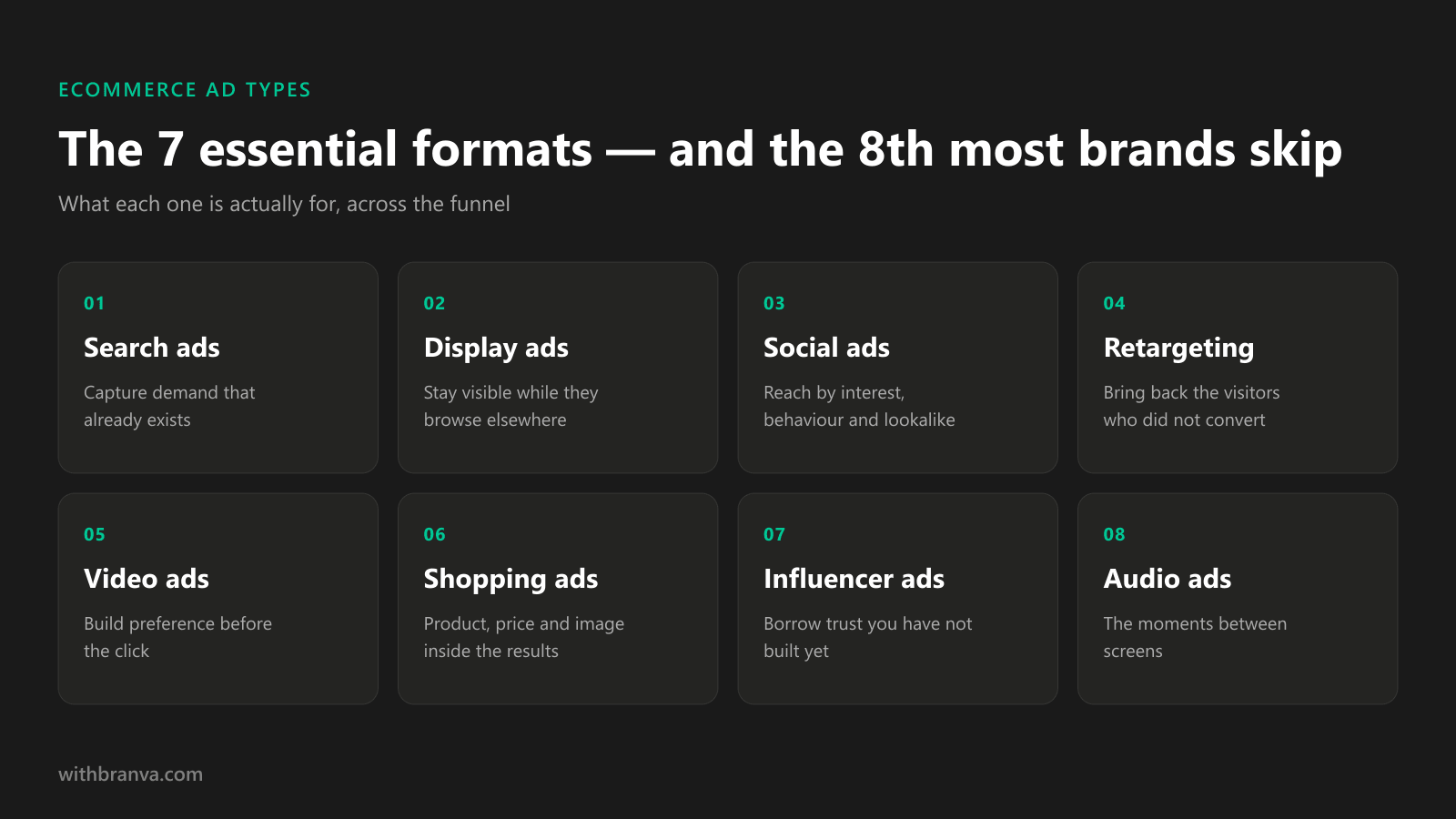
If you would rather not run these eight formats yourself, that is the service: Branva handles paid advertising for Shopify brands end to end — Meta, Google and TikTok, plus the creative volume and landing pages that decide whether the spend converts.
Frequently Asked Questions
What are the top ad platforms for retail and ecommerce advertisers?
For most DTC and retail brands the top platforms by revenue contribution are Meta (Facebook/Instagram) for demand generation, Google (Search + Shopping/PMax) for demand capture, and TikTok for creative-led discovery. Amazon Ads matters if you sell there, Pinterest works for visual/home/fashion categories, and audio (Spotify) reaches buyers in screen-off moments. Start with Meta + Google — they cover both sides of intent — before adding a third platform.
What is ecommerce advertising?
Ecommerce advertising is paid media used to promote an online store's products: search and shopping ads, display and social placements, retargeting, video, influencer partnerships, and similar formats. The goal is to reach shoppers across discovery and purchase—and to attribute revenue back to the right campaigns.
What are the different types of ecommerce ads that I should be aware of?
The seven essential types of ecommerce ads include search ads, display ads, social media ads, retargeting ads, video ads, shopping ads, and influencer ads. Understanding these types will help you choose the right methods to reach your target audience effectively.
How can I effectively target customers with search ads?
To effectively target customers with search ads, use exact match keywords to reach specific search queries related to your product. Start by researching keywords that potential buyers are using and bid on those terms.
What are the key components of a successful display ad?
Successful display ads should feature compelling graphics, a clear brand identity, concise messaging, and a strong call to action. Create ads that visually capture attention and communicate your brand's value quickly to increase engagement.
How can I measure the effectiveness of my social media ads?
You can measure the effectiveness of your social media ads by tracking engagement rates, conversion rates, reach, and impressions. Regularly analyze these metrics to optimize your campaigns and improve performance over time.
What strategies should I use for retargeting ads?
Utilize strategies like targeting recent website visitors, creating abandoned cart campaigns, and adjusting ad frequency based on user interaction. Aim to remind users of products they were interested in and encourage them to return for a purchase.
How can I make my video ads more impactful?
To make your video ads impactful, ensure high production quality, keep them concise, and include a strong call to action. Focus on storytelling that resonates emotionally with your audience, which can significantly boost viewer engagement.
How is e-commerce advertising different from traditional advertising?
E-commerce advertising is built around measurable, click-driven formats that send shoppers directly to a product page or checkout, while traditional advertising focuses more on broad awareness in print, TV, or radio. With e commerce advertising, every impression, click, and conversion can be tracked, which lets you optimize budget toward the channels and creatives that actually drive sales. That feedback loop is why most online brands shift the bulk of their ad spend to digital.
What channels work best for advertising for ecommerce stores?
The strongest advertising for ecommerce typically combines high-intent channels like Google Search and Shopping with discovery channels like Meta, TikTok, and YouTube, plus retargeting to recapture site visitors. The right mix depends on your margins, average order value, and how visual your product is. Start with one demand-capture channel and one demand-generation channel, then expand once you see consistent ROAS.
Who should run paid advertising for a Shopify store — in-house, freelancer, or agency?
Below roughly $5K/mo in combined ad spend, run it in-house: the fixed cost of anyone else eats the margin you are trying to grow. Between $5K and $150K/mo the constraint stops being budget and becomes creative volume and testing discipline, which is where a freelancer running one channel starts to cap out and a team running all of them together wins. Branva does that as a service — see paid advertising for Shopify for what the engagement covers.